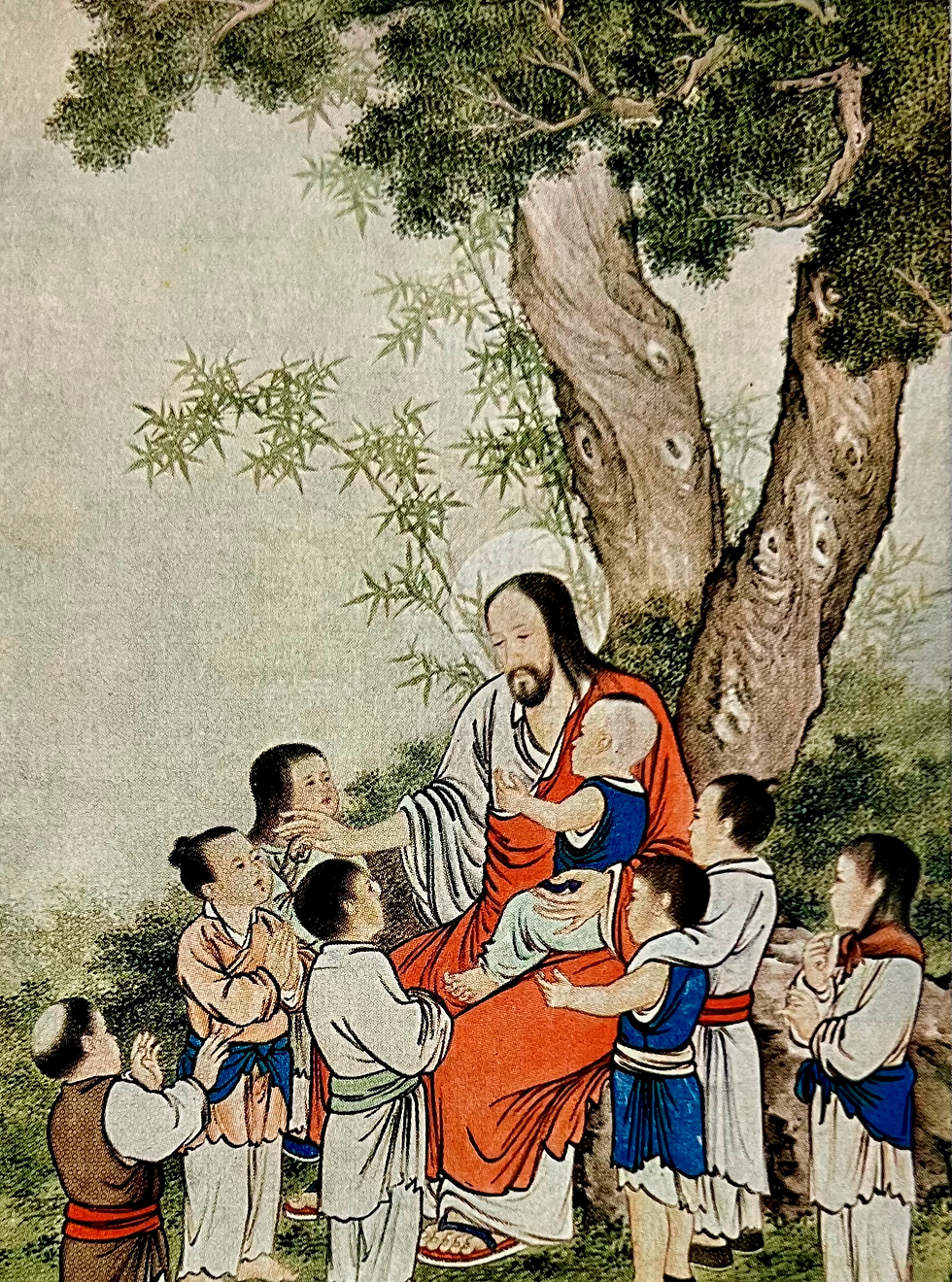
Seeds and Fields (种子与心田)

God is the sower of good seeds, but our hearts are the field that must respond to the sowing. We invite you to read Fr. Joseph Ruan's latest Bilingual Sunday Scripture Reflection below, included in Chinese and then in English:
Scripture Reflection in Chinese
常年期第十五主日(甲年)
今天是常年期第十五主日。今天的福音记载了耶稣所讲的「撒种的比喻」(玛13:1-23)。这是四部福音中最广为人知的比喻之一。许多教友一听到这段福音,立刻想到四种土地:路旁、石头地、荆棘中和好地。耶稣后来也亲自解释了这四种土地所代表的意义。不过,在解释四种土地之前,我们应当先按照玛窦福音的叙述,一步一步跟随耶稣的讲论。福音中的每一句话都有它的意义,每一个细节都有它的目的,引导我们更深入地认识天国的奥秘。
福音一开始说:「那一天,耶稣从家里出来,坐在海边。」玛窦福音很少记载没有意义的细节。「那一天」这一句话,把今天的福音与前面发生的事情连接起来。就在前一章,法利塞人已经开始商议怎样除掉耶稣。虽然跟随耶稣的人越来越多,却不是每一个人都相信祂。有人惊叹祂所行的奇迹,却拒绝接受祂的教导(玛11:20-24);有人听见祂的话,却始终不愿意悔改。在这样的背景下,耶稣开始用比喻讲论天国。比喻不仅是一种容易理解的教学方法,启示了天国的奥秘,同时也显露出人的内心。愿意寻求天主的人,会继续聆听,也会逐渐明白;已经关闭心门的人,即使听见比喻,不过当作一个故事而已。
玛窦接着告诉我们,耶稣「坐在海边。后来,由于聚集的人越来越多,耶稣便上了船,坐下来教训群众。按照犹太人的传统,老师坐着讲道,是正式施教的姿态(玛5:1-2)。因此,耶稣并不是随意与群众交谈,而是以教师的身份、带着权威宣讲天国。至于海边,也值得我们留意。玛窦虽然没有解释它的象征意义,但福音多次记载,各地群众来到加里肋亚海边聆听耶稣讲道。这幅图画已经暗示,耶稣所宣讲的福音,不是为少数人,而是向所有愿意聆听天主圣言的人开放。从福音一开始,玛窦便向我们展示了耶稣是天国的导师,也是向普世宣讲天主圣言的救主。
耶稣随后说:「看,有一个撒种的出去撒种。」这句话看起来十分平常,却揭示了整个救恩历史的起点。值得注意的是,耶稣先介绍撒种的人,然后才讲种子和土地。主动的一方始终是天主。整个救恩历史都证明这一点。天主先召叫亚巴郎(创12:1-3),先拣选以色列作为自己的子民(申7:6-8),又不断派遣先知,劝勉百姓回头归向祂(耶7:25-26)。到了时期圆满的时候,天主更派遣自己的独生子来到世界(若3:16;迦4:4)。因此,每一项救恩工程,都始于天主的主动,而不是人的寻找。当天主圣言临到我们之前,祂已经先寻找了我们;在我们回应祂以前,祂已经先向我们说话。
接下来,有另一个细节也特别值得留意。撒种的人把种子撒向整个田地,有的落在路旁,有的落在石头地里,有的落在荆棘中,也有的落在好地里。按照一般农夫的经验,没有人会故意把珍贵的种子撒在不能生长的地方。然而,耶稣却故意描写这样一位撒种者。这正显出天主无限的慈悲与慷慨。天主不会先衡量一个人是否配得恩宠,然后才向他说话。祂愿意把自己的圣言赐给每一个人。无论是忠信的门徒,还是远离教会的人;无论是义人,还是罪人,天主都不断向他们发出邀请(弟前2:4)。祂从不停止播撒圣言,因为祂始终盼望每一个人能够悔改归向祂(伯后3:9)。
这一点,正好得到今天第一篇读经的印证。依撒意亚先知代表上主宣告:「我口中发出的言语,不能空空地回到我这里来,反之,它必实行我的旨意,完成我赋给它的使命。」(依55:10-11)先知把天主的圣言比作从天降下的雨和雪。雨水不会立刻带来丰收,却会默默滋润土地,孕育生命,直到庄稼成熟。天主的圣言也是如此。很多时候,我们希望立刻看到成果;天主却常常在安静中工作,在忍耐中完成祂的计划。一句小时候听过的圣经,一篇多年以前听过的讲道,一句简单的祈祷,都可能在若干年以后成为一个人回头归向天主的开始。天主的圣言永远不会失去它的能力,因为它一定会完成天主托付给它的使命。
直到这里,耶稣才开始解释四种土地。注意,种子没有改变,撒种的人没有改变,改变的是土地,也就是人的内心。耶稣借着这个比喻告诉我们,天主圣言本身始终具有同样的能力,真正影响结果的,是人是否愿意接受这份恩宠。
第一种土地是路旁。耶稣说,这是指那些听了天国的道,却没有真正明白的人,邪恶者便来把撒在他心里的夺去了。圣经所说的「明白」,并不仅仅指知识上的理解,也是指以信德接受天主的圣言,让圣言进入生命,改变自己的生活。许多人听过福音,也知道福音,却没有让福音成为自己生活的准则。圣言停留在耳中,很快便消失了;只有进入心中,才能扎根成长。
第二种土地是石头地。这样的人听了圣言,立刻欢喜接受,却没有根,一旦为了福音遇到困难或迫害,便很快跌倒了。耶稣提醒门徒,真正的信德必须深深扎根于天主。人的情绪会改变,热情会减退,环境也会不断变化。如果信仰只建立在一时的感动上,便难以经得起考验。每天坚持祈祷,勤领圣事,忠于本分,在平凡生活中持守信德,这些都像树木隐藏在地下的根一样,虽然不容易被人看见,却支撑着整个生命。
第三种土地是荆棘中。耶稣解释说,这是指那些被「世俗的焦虑和财富的迷惑」所占据的人。耶稣特别先提到焦虑,然后才提到财富,因为很多人的信仰,并不是首先被财富夺去,而是先被焦虑占满了内心。对健康、工作、家庭、前途、经济的忧虑,使人的心渐渐失去对天主的信赖。财富本身并不是罪恶,真正的危险在于它慢慢占据了原本属于天主的位置。荆棘不会一夜之间长满田地,它是在不知不觉中不断生长,最后窒息了幼苗。同样,世俗的事物若不断侵占我们的内心,也会慢慢削弱我们的信德。
最后,耶稣讲到好地。这些人听了圣言,明白了,并且结出果实,有一百倍的,有六十倍的,也有三十倍的。值得留意的是,耶稣并没有要求每一个人都结出同样的果实。天主赏给每个人不同的恩宠、不同的圣召,也交付不同的使命(格前12:4-11)。祂所期待的,是每一个人都忠实回应自己所领受的恩宠,让圣言在自己的生命中结出应有的果实。
今天第二篇读经,圣保禄进一步把我们的眼光带向整个受造界。他说:「凡受造之物,都热切地等待天主子女的显扬。」(罗8:19)圣言所结出的果实,并不只影响个人。当一个人的生命因福音而更新,整个教会便得到建立;当教会不断迈向圣善,整个世界也开始分享天主所应许的更新。天国的丰收,最后将临于整个受造界。
亲爱的弟兄姊妹,每一个主日,我们首先围绕圣道的餐桌,然后围绕圣体的餐桌而聚集(参阅《天主启示宪章》21号)。基督先藉着圣言向我们说话,然后藉着自己的圣体圣血滋养我们。那位撒种的主,也赐给我们成长所需要的一切恩宠。今天,当我们聆听天主圣言的时候,让我们祈求上主预备我们的心田,使祂的圣言深深扎根在我们的生命中,结出丰盛的果实,并最终引领我们进入祂永恒的天国。
Scripture Reflection in English
Fifteenth Sunday in Ordinary Time (Year A)
Today we celebrate the Fifteenth Sunday in Ordinary Time. In today’s Gospel, Jesus tells the Parable of the Sower (Mt 13:1–23). It is one of the best-known parables in all the Gospels. Most Christians immediately think of the four kinds of soil: the path, the rocky ground, the thorns, and the rich soil. Jesus Himself explains what each of them represents. Yet before we arrive at the explanation of the four soils, it is important to follow the Gospel as Matthew presents it. Every sentence has its purpose, and every detail helps us understand what Jesus is teaching about the Kingdom of Heaven.
The Gospel begins by saying, “On that day, Jesus went out of the house and sat down by the sea”. Matthew rarely includes details without purpose. The expression “on that day” connects today’s Gospel with what has just taken place in the previous chapter. Jesus has encountered increasing opposition from the Pharisees, who have already begun to plot against Him (Mt 12:14). Although large crowds continue to follow Him, many refuse to believe in Him. Some admire His miracles but reject His message (Mt 11:20–24). Others listen to His teaching but refuse to change their lives. It is at this moment that Jesus begins to teach in parables. The parables are not merely illustrations; they reveal the mysteries of the Kingdom of Heaven while at the same time exposing the disposition of the human heart. Those who sincerely seek God will continue listening and come to understand. Those who have already closed their hearts will hear only a story.
Matthew also tells us that Jesus “sat down by the sea”. Soon the crowd becomes so large that He enters a boat and teaches from there. Sitting was the traditional posture of a Jewish teacher (cf. Mt 5:1–2). Jesus is not speaking casually to the crowd; He is teaching with authority. The sea, beside which great crowds from many regions gathered to hear Him (cf. Mt 4:25), also reminds us that His message is destined for all who are willing to listen. From the very beginning of this scene, Matthew presents Jesus as the Teacher of the Kingdom who proclaims God’s Word to all people.
Jesus then begins with a very simple sentence: “A sower went out to sow”. At first glance, this sounds like the beginning of an ordinary farming story. Yet this first sentence already reveals an important truth. Jesus begins with the sower before He speaks about the seed or the soil. The initiative always belongs to God. Throughout the history of salvation, God is always the first to act. He called Abraham before Abraham knew Him (Gen 12:1–3). He chose Israel before Israel became His faithful people (Dt 7:6–8). He sent the prophets again and again, even when His people rejected them (Jer 7:25–26). Finally, He sent His own Son into the world (Jn 3:16; Gal 4:4). Every work of salvation begins with God’s initiative. Before we search for God, He has already come searching for us (1 Jn 4:10). Before we respond to His Word, He has already spoken.
One detail of the parable deserves careful attention. The sower scatters his seed everywhere. Some falls upon the path, some on rocky ground, some among thorns, and some on rich soil. An experienced farmer would normally avoid wasting precious seed in places where it could never grow. Jesus deliberately describes a different kind of sower. His generosity reflects the generosity of God Himself. God does not reserve His Word only for those who seem ready to receive it. He offers His grace to everyone (1 Tim 2:4). The Gospel is proclaimed to believers and unbelievers, saints and sinners, the faithful disciple and the one who has wandered away. God never grows tired of speaking because He never gives up hope that hearts can change (2 Pt 3:9).
This truth is beautifully confirmed in today’s first reading. Through the prophet Isaiah, the Lord says, “So shall my word be that goes forth from my mouth; my word shall not return to me void, but shall do my will, achieving the end for which I sent it” (Is 55:10–11). Isaiah compares God’s Word to the rain and snow that come down from heaven and give life to the earth. Rain works quietly. It enters the soil, nourishes the seed, and prepares the harvest long before anyone can see visible results. God’s Word works in the same way. We often expect immediate results. God usually works patiently and silently. A word heard today may bear fruit years later. A child taught the faith may return to the Church after many years. A single verse of Scripture may remain hidden in the heart until the moment God chooses to bring it to life. God’s Word never loses its power because it always accomplishes the purpose for which He sends it.
Only after presenting the sower does Jesus explain the four kinds of soil (Mt 13:18–23). The seed never changes. The sower never changes. What changes is the condition of the soil. Jesus is teaching us that the effectiveness of God’s Word does not depend upon the Word itself but upon the disposition of the human heart.
The first seed falls upon the path. Jesus says this represents those who hear the Word without understanding it, and the evil one comes and steals it away. In the language of Scripture, understanding is more than intellectual knowledge. It means welcoming God’s Word with faith and allowing it to shape one’s life. Many people hear the Gospel, but hearing alone is not enough. The Word must enter the heart before it can bear fruit.
The seed that falls on rocky ground represents those who receive the Word with joy but have no roots. When difficulties or persecution arise, they quickly fall away. Jesus is reminding His disciples that faith must be rooted deeply in God. Feelings come and go. Enthusiasm rises and falls. A faith that depends only on emotion cannot endure trials. Strong roots are formed through daily prayer, the sacraments, faithful obedience, and perseverance. These often remain hidden, just as roots remain hidden beneath the ground, yet they sustain the whole life of the believer.
The seed among thorns represents those whose lives become occupied by “worldly anxiety and the lure of riches”. Jesus chooses these words carefully. Anxiety fills the heart with fear, while riches fill the heart with false security. Both leave little room for God. The problem is not that work, responsibilities, or material possessions are evil. The danger appears when they gradually occupy the place that belongs to God alone. Like thorns, they grow slowly until they choke the life of faith.
Finally, Jesus speaks of the rich soil. These are the people who hear the Word, understand it, and bear fruit—some a hundredfold, some sixty, and some thirty. Notice that Jesus does not expect every disciple to produce the same harvest. God gives different gifts, different vocations, and different responsibilities (1 Cor 12:4–11). What He desires is that every disciple allows His Word to bear the fruit that He intends.
Saint Paul broadens this vision in today’s second reading (Rom 8:18–23). He tells us that “creation awaits with eager expectation the revelation of the children of God” (Rom 8:19). The fruit produced by God’s Word is never limited to one individual. Whenever a human heart is transformed by grace, the whole Church is strengthened. Whenever the Church grows in holiness, the world itself begins to experience the renewal that God has promised. The harvest of the Kingdom ultimately embraces all creation.
My brothers and sisters, every Sunday we gather first around the table of God’s Word and then around the table of the Eucharist (cf. DV 21). Christ first speaks to us and then gives Himself to us. The same Lord who sows the seed also provides the grace needed for that seed to grow. As we listen to His Word today, let us ask Him to prepare the soil of our hearts. May His Word take deep root within us, bear abundant fruit in our lives, and one day lead us to share in the fullness of His Kingdom.
Fr. (Joseph) Guozhang Ruan was born and ordained in China. After serving in parish ministry in the Diocese of Mindong, Fujian, he pursued advanced studies in moral theology in Rome, earning a doctorate from the Pontifical Lateran University. Since coming to the United States in 2004, he has served in several parishes in the Archdiocese of New York. He is currently the Director of the Chinese Apostolate for the Archdiocese of New York and Parochial Vicar of Holy Rosary Church on Staten Island. His ministry focuses on serving Chinese Catholics, promoting evangelization, and fostering greater understanding between the Church in China and the universal Church.
----------------------
The USCCA is a 501(c)3 tax-exempt organization. Your donations are tax-deductible to the maximum extent allowed by law. The success of our work depends upon the generosity of people like you.